“It’s important for you to understand your parents’ health needs, ensure they have those regular checkups, and make sure they know that by maintaining their health they can have a high quality of life.”—Rebecca Harwood, CEO of Insurances, Australian Unity
Contents
We all want to see our loved ones thrive. Supporting ageing parents is about helping them maintain the best quality of life possible. Thankfully, with the right measures in place, they can age gracefully, independently and with dignity.
Being by their side isn’t just comforting for them. It helps you ensure your parents receive the healthcare they need to standards they, and you, expect.
By encouraging healthy habits, spotting the signs of health decline, and acting early, you can help stop small issues from becoming major problems.
At the same time, your own wellbeing matters too.
When you put everyone’s needs before your own, burnout becomes a real threat. Your physical health suffers, your stress levels rise, your hobbies are a thing of the past and you may not feel like yourself.
That’s why prioritising your own self-care and regular check-ups is essential.
In this chapter, we speak to the experts to find out how you can stay on top of your parents’ and your own health.
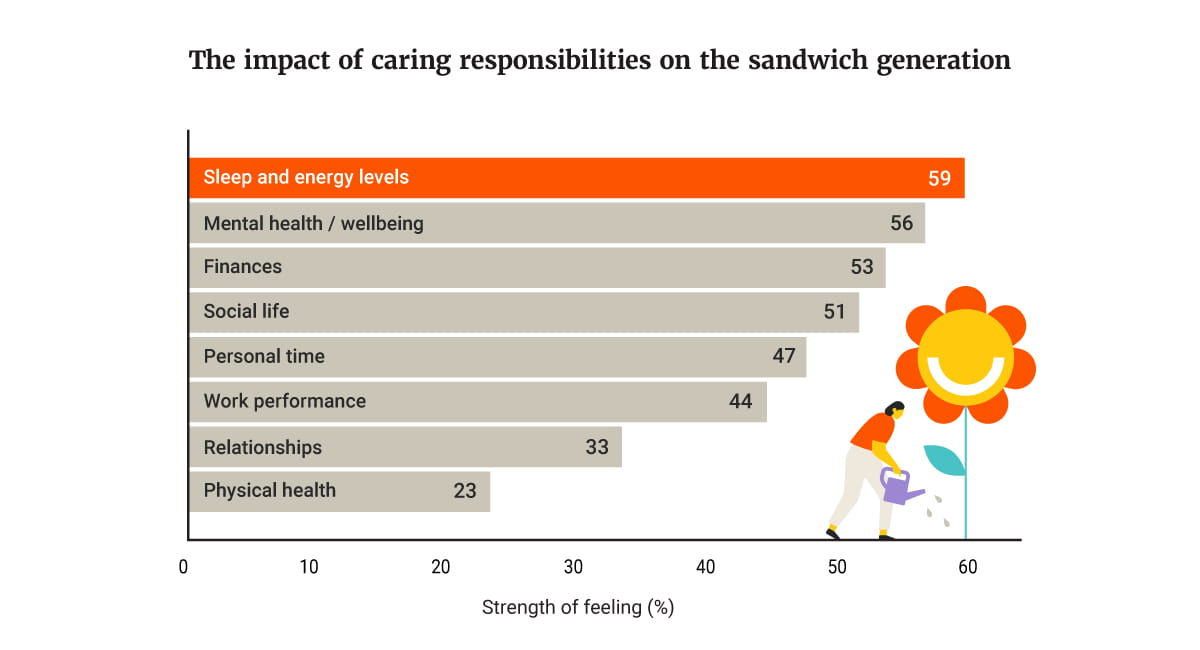
Data sourced from an Australian Unity survey using Kantar Profiles raw data to understand views of the sandwich generation.
Their health: What to watch out for
As our parents age, staying healthy is key for a better quality of life.
“If your parents prioritise their health, they can maximise their later years. But if they don’t, their health decline can accelerate, resulting in a lower quality of life,” says Rebecca Harwood, CEO of Insurances at Australian Unity.
But our parents can lose interest in maintaining their health or even push back against treatment, and they may not notice or broach the topic of health decline.
That’s why it’s so important for you to know how to spot the signs and help them implement healthy habits.

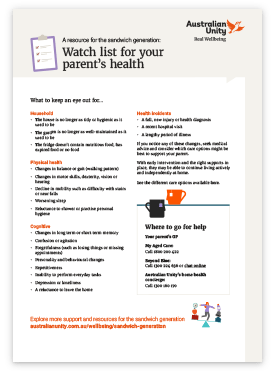
The early signs of health decline
"Some of the most obvious signs of physical decline are changes in balance, gait, mobility, motor skill control, dexterity, vision and hearing as well as worsening sleep," says Louise Polzella, Health Coach at Australian Unity.
In terms of cognitive impairments, Louise says confusion, agitation, and short-term memory issues are among the most common.
Elizabeth Albury, GM of Service Delivery, Home Health at Australian Unity, says older Australians can be good at masking their symptoms.
“Sometimes it’s really little signs. If you drop in to visit for an hour, you may not see it. But if you stay for a day or longer, the signs of decline may be more apparent,” she says.
If you notice any of these changes, the next step is to seek medical advice. Based on what your medical professional finds and recommends, it might be time to talk to your parent about the different care options available for older Australians.
Loneliness and depression in older Australians
Physical and cognitive health issues aren’t the only things your parents may face. Your parents’ mental health may also suffer.
Elizabeth says there are two key things older Australians want as they age. Firstly, to age safely and actively in their own home. Secondly, to remain connected to their community and their families.
“The minute one of those changes, that is the trigger for loneliness and even depression—particularly for those who have lost their partner,” she says.
Concerned that your parent might be facing these issues? Read more on our experts’ strategies for helping your parents with loneliness.
The need for quick actions
“Don’t pause as soon as you’ve seen the signs,” urges Elizabeth.
A potential diagnosis is scary for everyone, but early intervention is vital.
Elizabeth says often people see the initial signs but may not act fast enough. Then the parent has an incident such as a fall and suddenly the opportunity for being proactive is gone.
“Then they’re on a waiting list for months and unable to leave hospital until they’ve been assessed and through the entire My Aged Care process because it’s not safe for them to go home,” she says. “Families are then forced into making decisions that are against their preferences because the parent hasn’t got supports in place. Whereas, if they're in the system and an incident happens, it's much simpler to receive the right funding and support.”
Staying on top of appointments and check ups
Rebecca highlights the importance of staying on top of the small things, especially when your ageing parents might be reluctant to.
“Understanding their health needs, scheduling regular check ups with their GPs and specialists, and encouraging a positive attitude to healthcare will maximise their quality of life,” she says. “My dad thinks he’s bulletproof. It’s just about regular conversations and gentle nudges.”
Rebecca says private health insurance is a great tool for managing your parents' health, and that there are many health insurance options for elderly Australians.
“It helps keep on top of those regular health checks that may not be covered by Medicare. You’ve got physiotherapy, optical, dental. This is great for prevention but also for treatment if things start to decline.”

Mobility and activity for prevention
Prevention is key to longevity. Elizabeth says there are things your parents can be doing even before they become eligible for government-funded assistance.
This could include physiotherapy programs, pilates classes or local walking groups.
“All of these little preventative things, even outside of formalised programs, are important to think about. And it’s often a good steppingstone for the next tough conversation about care in the home,” she says.
Louise agrees, stating that mobility and strength are strong predictors of health in older adults.
“We know that people who live sedentary lifestyles are more likely to see changes in their mobility and independence, and that can be a really slippery slope,” she says. “So try your best to encourage your parents to walk, to stay active, to seek guidance from a physiotherapist to continue to build their physical activity skills."
Your health: Making you your priority
Caregiving often means compromise—and for many of us, our own health is the first thing to be neglected. According to Australian Seniors’ 2025 Sandwich Generation Report, 80% of sandwiched caregivers experience strain on their physical health, with 33% reporting considerable to extreme strain.
But the Australian Unity Wellbeing Index—a 25-year study undertaken in partnership with Deakin University— identifies health as one of the seven domains of personal wellbeing.
So, for someone who often puts others first, how can you keep your own health needs near the top of your priorities?
Louise Polzella, Health Coach at Australian Unity, says people in caregiving roles are often very altruistic and can find it hard to prioritise their needs, especially when they’re time poor.
“The sandwich generation is such a selfless group of people. But they’re at high risk of burnout, and they really require a lot of care and patience themselves.”
— Louise Polzella,
Health Coach,
Australian Unity
If you do suffer from burnout, you may see changes in your own mood or physical health which can circle back and impair the caregiving that you’re providing.
Equally, if you prioritise your own health, your positive wellbeing will have a ripple effect on those around you.

Balancing caregiving and self-care
“The sandwich generation often feel a lot of guilt and they know the circumstances aren't good for their health. But it's very difficult to get on top of these things, especially if they don't have support,” says Louise.
Louise's biggest piece of advice is to offset some of the responsibilities to free some time up for yourself.
“That might mean connecting with My Aged Care for support services, or involving friends, family or neighbours who could pick your kids up from school or pop in to visit your parent to ease some of the burden.”
Louise’s caregiver wellbeing strategies and tips
- Short bursts of exercise: “If you have five or ten minutes, walk around the block or stretch at your desk or do a quick yoga video on YouTube—anything that gets a little bit of movement in.”
- Pre-planning meals: “Meal planning is the way to go about healthy eating, especially when you're time poor. It doesn't need to be difficult meals either. It could be a few handfuls of salad with a rice cup and a tin of tuna or beans—you're hitting the major three food groups and it's super quick and easy.”
- Online grocery shopping: “Online shopping for your groceries streamlines your shop. You could even get the order delivered to your door.”
- Carve out some 'me' time: “Whether it's listening to an interesting podcast, reading a chapter of a book each night, knitting while you're relaxing on the couch, enjoying a cup of tea or just having a nice warm shower. Anything you can do to feel like you're having some 'me' time can have a big impact. You're giving yourself an opportunity to rest and can return rejuvenated and more present.”
It’s easy to focus completely on caring for elderly parents and children but remember that preventative health for carers is just as important as it is for our parents.
Health insurance for the sandwich generation
Rebecca Harwood, CEO of Insurances at Australian Unity, stresses that your own health is not a given.
“If you don’t stay healthy, you can’t look after the people who are relying on you. We talk about the importance of older generations having the right health cover and maintaining their health checks, but it’s equally important for those in the sandwich generation so they can look after mum and dad and children,” she says. “There’s a lot of pressure that comes with juggling the needs of your ageing parents and children. Health insurance can help you maintain your wellbeing.”
Rebecca says it’s not just you who can benefit from health insurance, but also your children as they can generally remain on your policy up until the age of 30 if they are not married or living in a de facto relationship.
Watch list for your parent’s health
A parent's home, their physical health, their state of mind—small changes can signal bigger needs. This resource helps you notice what matters, so nothing important is missed.