“A supportive network can look different for everyone. It could be someone who takes an active role in caregiving alongside you or it could be someone who provides you with emotional support.”—Louise Polzella, Health Coach, Australian Unity
Contents
Those within the sandwich generation spend an average of 31.7 hours per week on unpaid care for younger and older generations, according to the Australian Seniors’ 2025 Sandwich Generation Report. That’s almost a full-time job, on top of paid work!
So, it’s not surprising that they also report their biggest challenge being balancing caregiving responsibilities with personal life and health.
Yes, time is tight, but thankfully there are ways to create breathing space and feel more in control. It’s not about doing everything—it’s about making choices that protect your wellbeing.
Connection is a key part of this equation. Building a support network of people who understand your challenges, can offer guidance or even just lend a listening ear isn’t just helpful, it’s essential.
When you share the load and lean on trusted relationships, caregiving becomes less isolating and more sustainable. In this chapter, our experts share advice on navigating those mounting responsibilities and how building a supportive network can have exponential benefits on your wellbeing.
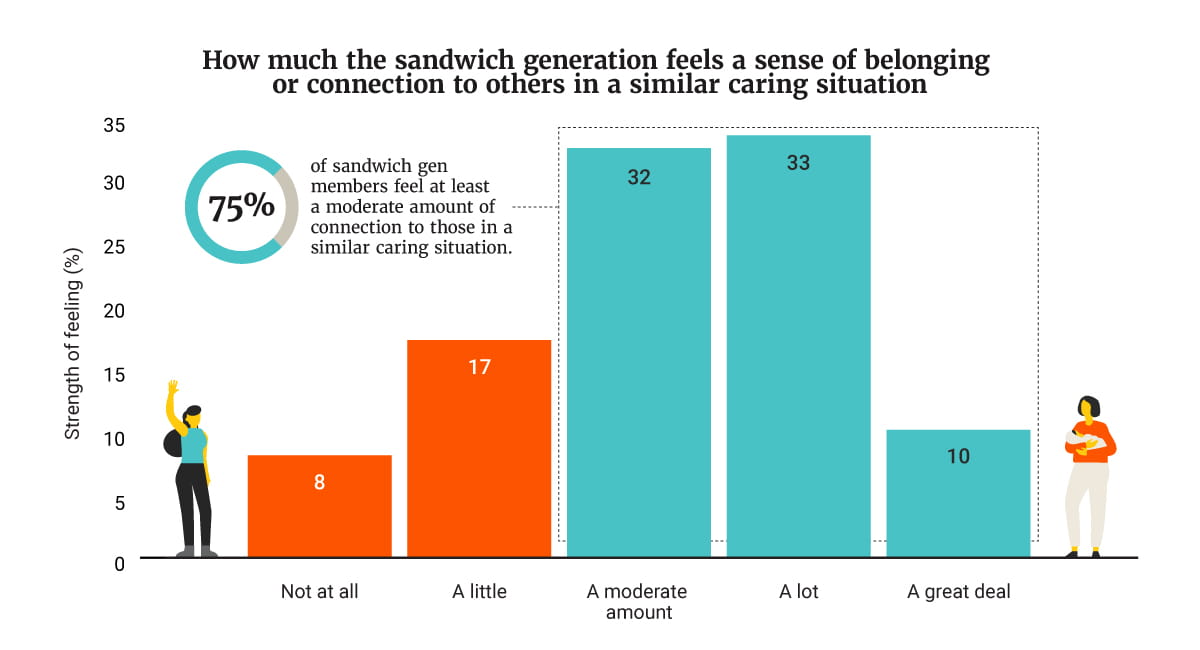
Data sourced from an Australian Unity survey using Kantar Profiles raw data to understand views of the sandwich generation.
Managing volunteering as a caregiver
School fete. Sports carnival. Book Week. For the sandwich generation, the volunteering commitments and unpaid duties can feel never-ending. And once you start saying "yes," obligations multiply.
Here's a question: are you taking on too much?
If the answer is yes, it's not just burnout you're facing. It's empathy fatigue, irritability, resentment and indecisiveness—all signs that you've exceeded your capacity.
According to Australian Unity Wellbeing Index data, one of the biggest factors that determines the wellbeing of an unpaid carer is their overall caring load—that is, how long they spend each week on caring duties.
“When someone is under constant stress, it can affect their ability to process information and have a real impact on the brain,” says Inouk Mackay, Mental Health Coach at Australian Unity. “If that's happening, you need to reduce your load to operate in a reasonable capacity.”
Yes, we know that volunteering is shown to boost personal wellbeing and your sense of community, but is that still true when your plate is full?
Saying “yes” to the right things and “no” to the rest isn’t selfish—it’s smart. Here’s how you can manage expectations and still get that community glow.

How to set boundaries when volunteering
Setting boundaries is important, but it can be tricky to figure out which things you want to prioritise—especially if you’re used to taking on everything.
“Sometimes it requires a lot of planning to prioritise. Instead of relying on all the information in your mind, writing a list of goals and making a plan can be really helpful,” suggests Inouk.
Being organised in this way can help you take a step back and see what’s important to you.
When deciding what obligations to commit to, Annabel Reid, CEO of Carers Australia, suggests asking yourself the following questions: Is it necessary? Do I have to do it? Could I not do it? Could someone else do it? Do I want to do it?
“Carers often struggle to let go of things. They often feel the need to carry all the responsibility,” says Annabel.
You're already contributing by caring for other people and parenting and likely also working, so how much more is utterly necessary?
Of course, that doesn’t necessarily mean rejecting all obligations. If you have four volunteering responsibilities, you could try cutting it back to one so that you still get that sense of community and social inclusion.
Then it’s about open conversations to make sure you’re clear on these boundaries with others.
Sharing the load
It’s easy to feel as though you need to do it all, especially if you’ve been carrying everything and going through this experience alone up until now. By sharing the load, you can protect your wellbeing and you might even find a renewed sense of community with those supporting you.
Consider trying some of these options below:
- Identify which tasks you’re doing that could be passed on
- Organise a monthly meeting, dinner or coffee catch up with family members to discuss matters relating to your parents and capacity for others to pick up tasks
- Start a group chat with your family for updates and emotional support
- Outsource tasks for your parents such as house cleaning, gardening or grocery shopping to a home care provider
- Keep your parents’ GP up to date on any resistance from your parents as they can also offer support
You don’t have to go it alone. By involving others, you’re reducing your workload, lightening your mental responsibilities and increasing the support networks for those you care for. There's strength in numbers, after all.
Finding your tribe: The strength of community
Social connection is the glue that holds our days together. It makes hard times bearable. But when time is tight, it's often the first thing to be sacrificed.
“Never underestimate the power of conversation and seeking support from others. Just having a simple cup of coffee with someone to talk about what’s going on can energise you endlessly,” says Inouk Mackay, Mental Health Coach at Australian Unity.
When you're caring, going out for dinner or playing sports with friends can be a long-forgotten luxury. But from small seeds comes great harvests. Australian Unity Wellbeing Index research shows that relationships and sense of community are key to Real Wellbeing. Prioritising these is invaluable for everyone, but especially for the sandwich generation.
Here's how to find your tribe and surround yourself with people who lift you up in times of need—even if right now you feel completely alone or like you simply don’t have the time.

The cycle of isolation
If you're not well supported in your caring responsibilities, social connection will likely become your last priority.
“This can put strain on your relationships. That tension can lead carers to feel overwhelmed and guilty for not being able to commit to their relationships in the way that they would love to be able to,” says Louise Polzella, Health Coach at Australian Unity. “The result can be a decline in their social network or community, and they might see changes in their number of friendships but also the quality of their friendships as well.”
This can foster feelings of social isolation, which can cause a vicious cycle of loneliness. But don’t worry, overcoming isolation as a caregiver is possible.
Tips for building a support network through incidental connections
Between your many caring responsibilities for your children and parents, you likely interact with a myriad of people throughout the day.
“It’s easy to feel like you don’t have time to stop for a chat, but you may be surprised at the outcome of a five minute conversation with someone who might understand what you’re going through.”
— Louise Polzella,
Health Coach,
Australian Unity
And over time, those relationships could flourish and turn into a supportive network that keeps you going through tough times.
The parents of your children’s friends are a great starting point. There’s a good chance they can relate to your experiences, and you may be able to support each other by alternating school drop offs or taking turns giving each other a night off.
And if you're finding it hard to prioritise social events, Louise has some advice.
“Having ongoing events in the calendar can help as you have something to look forward to, but it also allows you to treat that social activity as an important appointment. That time is blocked out for you,” she says.
When feelings of loneliness persist
Of course, just because you have people around you, that doesn’t mean you can’t still feel lonely or isolated. But a vital part of sharing the burden is speaking to others about our experiences. Feeling seen, heard and understood is sometimes all we need to make things seem more manageable.
Inouk says it's up to you to share your stories and experiences with others.
“Not everyone understands what other people are going through unless you talk about it. That's why communication is key, not keeping all these things to yourself,” she says. “A lot of people are involved in caring for parents and children, so you’re not alone. You can get advice or even just vent to people who really understand what you’re going through.”
It’s not about complaining but being open with others about what’s going on in your life. If you feel uncomfortable opening up, why not start small with someone you think will be able to relate in some way.
Sandwich generation support resources
Outside of your own circles, there are a number of organisations and caregiver support networks that can help you get the assistance and sense of community that you need.
Carer Gateway, a national, government-funded service, is an excellent resource for carers which provides free counselling, support, advice and training. The organisation can also link carers to services such as respite care.
“Even if you’re only just starting to realise that you’re a carer, reach out because there are many things that may be very helpful for you,” says Annabel Reid, CEO of Carers Australia.
The peak body for each state and territory such as Carers New South Wales and Carers Queensland is another great contact. They can link you to local programs, local service providers and other types of support for carers.
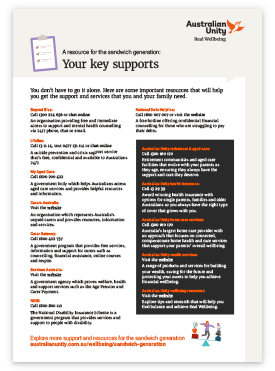
Your key supports
You don't have to go it alone. This resource maps the services and supports available to you and your family—so you know exactly where to turn, and nothing falls through the cracks.