“Once your parent’s capacity is no longer there, it’s too late to draft an Enduring Power of Attorney to capture their wishes. You don’t want to wait until the doctors are telling you they don’t have capacity anymore.”—Nicole Woodward, Head of Trustee Services, Australian Unity
Contents
There’s a good chance your parents have spent their entire lives building their finances in order to live comfortably in retirement. But what if they start to need help managing those finances? And what happens when they can no longer make decisions about their money and even their health?
Hypothetical discussions about finances, end-of-life arrangements and medical decisions are challenging and emotional. They’re likely to be some of the hardest conversations you’ll have with your parents.
Your mum and dad may not be receptive at first—but be patient. These discussions are essential for planning a secure future for them and ensuring their wishes are honoured. By tackling these topics early and openly, you create stability for your parents and peace of mind for yourself.
In this chapter, our experts share how you can broach these sensitive topics with care, as well as what needs to be put in place.
At the same time, carers often face their own financial strain. So we share practical tips for money management that can make a big difference for you and your family.
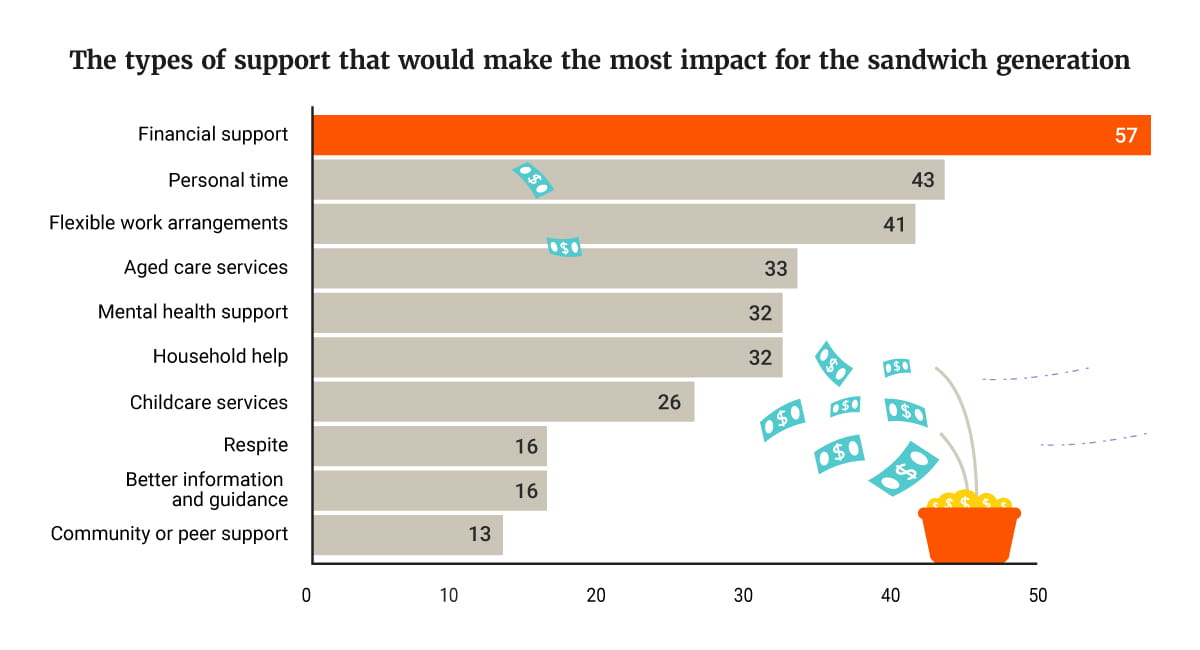
Data sourced from an Australian Unity survey using Kantar Profiles raw data to understand views of the sandwich generation.
Financial planning for ageing parents and yourself
Helping a parent with their financial obligations can be stressful, especially if they haven’t openly discussed their finances before.
It may be tough, but starting financial planning discussions early is an important way to help ensure your parents are set up for success and nobody is left in the dark.
“People usually have these conversations at a point of crisis or inflection, and that does not result in the best outcomes,” says Adnan Glinac, EGM of Life at Australian Unity.
It’s vital to prioritise these conversations, and a timely reminder to consider your own financial situation.

How to talk to ageing parents about money and finances
“Family dynamics can be difficult at the best of times,” says Adnan. “But if you don’t have these conversations early on, a crisis can become a bigger crisis. You may need to scramble to find documentation and the bare basics, so the stress in an already stressful situation becomes amplified.”
He says the sooner you can have these tough conversations with your parents, the better.
“Helping your parents downsize their house, sell the home and go into a retirement community can have a long lead time. It could be 10 years in the making to make sure everyone is emotionally and financially ready.”
Approach these topics factually, slowly, and in a setting that is comfortable and calm for everyone. If you have siblings, it’s a good idea to involve them as well. Visit Chapter Two for more tips on how to broach these tough conversations.
What financial information you need to know
The amount of information your parents divulge will depend on what they’re comfortable sharing.
Ideally, you should have enough information to have a financial map of understanding.
Things you should be aware of include where their major financial affairs sit such as savings accounts, other bank accounts and financial investments. You should also know about any loans, regular debits and how they pay their bills.
For example, your parent might be going to the post office to pay their electricity bill. A simple way you could help is by setting up a direct debit online for them.
Knowing how their finances are structured allows you to understand their plans and respect how they want their affairs to be managed into the future.
Considering your parents’ perspective
It might be easy to become preoccupied with your own feelings of awkwardness or discomfort, but you also need to consider the perspective of the person you’re caring for.
It's well known that our finances are crucial to our overall life satisfaction. The Australian Unity Wellbeing Index has consistently found a clear link between low household income and lower wellbeing. But financial wellbeing isn't just about high income, it's about having a sense of security and control over our finances.
Your parents may be losing control over many areas of their life such as health and place of residence. It may feel like their finances are one of the last things they have control over.
So keep this in mind when having these conversations.
“Sharing financial control requires a lot of trust, even if it is with your children. Reminding them that they’re still in control of their finances can soften the conversation.”
— Adnan Glinac,
EGM of Life,
Australian Unity
“To help them feel more comfortable, they can put rigours around how much access they give and what information they provide. Don’t make the conversation about inheritance. Financial care is a genuine piece of caring for someone,” says Adnan.
Remember that the most important thing is making sure your parents have enough money to be financially safe, maintain their lifestyle and age gracefully.
Learn more from our experts on managing your parents’ post-retirement finances.

Financial planning for the sandwich generation
Like your parents’ finances, Adnan says it’s never too early for the sandwich generation to start financial planning. By doing so, you can put you and your family in a better financial position as you age and set yourself up for a more comfortable retirement.
While specifics will depend on your own personal situation and risk appetite, saving, investing and superannuation are key drivers to consider.
“Generally, investing is riskier than saving but people shouldn’t shy away from investing because it can drive more funds in the long term,” he says.
Whatever you decide, your strategy should involve discipline and routine.
And before considering investing, it’s important to have a safety buffer.
“If you become unemployed, having a safety net to pay your bills and mortgage for three to six months is a great place to start. Start small and work your way up to that. It’s just critical to take that leap and get started, you’ll have much more comfort in your finances.”
Adnan’s biggest tip for the sandwich generation is to consider maximising your super contributions.
“This could make a huge difference in your financial wellbeing and how safe you feel in retiring."
Starting the estate planning conversation and putting it in writing
No one wants to think there will come a point when they can no longer make decisions about their health, life and finances. We all tend to think we’ll have more time. But health issues can occur suddenly and dramatically.
That’s why it’s so important for your parents to share their wishes while they have capacity.
This is called estate planning, and it involves documenting what you would like to happen to your assets and your care after you become incapacitated or pass away.
“Understanding your parents’ wishes should they become seriously ill or incapacitated is vital to help ensure those wishes are met,” says Nicole Woodward, Head of Trustee Services at Australian Unity. “Most of us, if given the chance, would rather have our wishes known and documented and followed than have somebody guessing what we might have wanted.”
This is also a great opportunity for you to think about putting these safeguards in place for yourself.

How to start estate planning conversations
The time to start the estate planning conversation with your parents is now, says Nicole. “The longer you put things off, the harder it gets. And once your parent no longer has capacity, it’s too late.”
It’s never an easy conversation but making sure you come from a position of love and kindness is vital. It can also help to have an independent person present who your parent knows and trusts, such as a close friend or other relative, so they don’t feel like you’re pressuring them. If you have other siblings, it’s helpful for them to be present too.
“Make sure your parents know you’re doing it for their benefit, to make sure their wishes are known. You're trying to help them put the supports in place so they can use it as they wish,” says Nicole.
Finding it hard to talk about? You could try simply sowing the seed and then building on that conversation another time so that your parents have time to process.
What your parents need to prepare
There are some important safeguards that are vital for your parents to have in place in the case of an emergency. This includes:
- Medical guardian: To make decisions about the care and accommodation they receive. This is sometimes also called a medical power of attorney.
- Power of attorney: To make financial and legal decisions on their behalf, including determining what care or residential accommodation they can afford.
- Advanced care directive: To set out instructions for end-of-life care, including the medical intervention they wish to receive.
- Will: To specify what will happen to their assets after they pass away.
Choosing the right person or company
When choosing who will fill the roles of medical guardian and power of attorney, it’s important to consult the person or people.
“If your parents are appointing friends and family, they need to have a robust discussion before appointing them, so they understand what it entails and ensure that they really can help,” says Nicole. “A lot of people see it as an honour, but it's often a difficult challenge to take on in addition to what you've already got going on within your own family unit. So it’s important to be mindful about who you want to step into that role and be confident that they are going to be able to do it.”
Engaging a third party, such as Australian Unity Trustees, as power of attorney and a close relative as a medical guardian can be a great blend that takes the pressure off family members.
“Where there's money, there's often tension. That’s a definite benefit of having a trustee company make those financial decisions.”
— Nicole Woodward,
Head of Trustee Services,
Australian Unity
“Go with a trustee company whose values most match your own. While individuals may change, the values of the company will carry through no matter who the employee at the time is,” says Nicole.
Putting those wishes in writing
The next step is to help your parents put these decisions in place.
To do this, visit your family solicitor or a lawyer who specialises in estate planning. They will help ensure everything is documented and legally binding.
While homemade will kits might seem like a budget-friendly solution, Nicole says these are often fraught with issues.
“There's no point going through the whole process and thinking you’ve done it for things to fall through when you can't fix it anymore,” she says.
Want more information before broaching these complex family financial discussions? Our experts do a deep dive into end-of-life finance conversations with your ageing parents so you can feel completely prepared.
Personal Record Book for important details
Sit down with your parents and fill this in together.
From important contacts and legal documents to estate decisions, funeral wishes, passwords and personal assets—the Personal Record Book keeps everything that matters about your parents in one place.
This is the document you will be grateful you completed.