“These are very difficult conversations to have, because often you're suggesting change to someone who wants things to stay the way they are, even if that's no longer practical or possible.”—Annabel Reid, CEO, Carers Australia
Contents
“Be the overbearing daughter. Be the curious son. But don’t be dissuaded from the goal,” says Elizabeth Albury, GM of Service Delivery, Home Health at Australian Unity.
Talking to your parents about their future can be a delicate balancing act. The conversations you need to have can feel like a role reversal—but they're essential. They require open communication, empathy, patience and trust.
As daunting as it may seem, a little courage goes a long way. Start the conversation early. This allows you time to implement strategies, find solutions and plan for the future together. And no, procrastination is not a good idea. Waiting only makes it harder.
In this chapter, you'll also learn what to say (and not to say) when talking to your parents, children, partner, friends, siblings and workplace as you navigate the ripple effects caring can have on every aspect of your life.
At Australian Unity, we've supported thousands of families through these transitions. Here are tips from our experts that actually work.
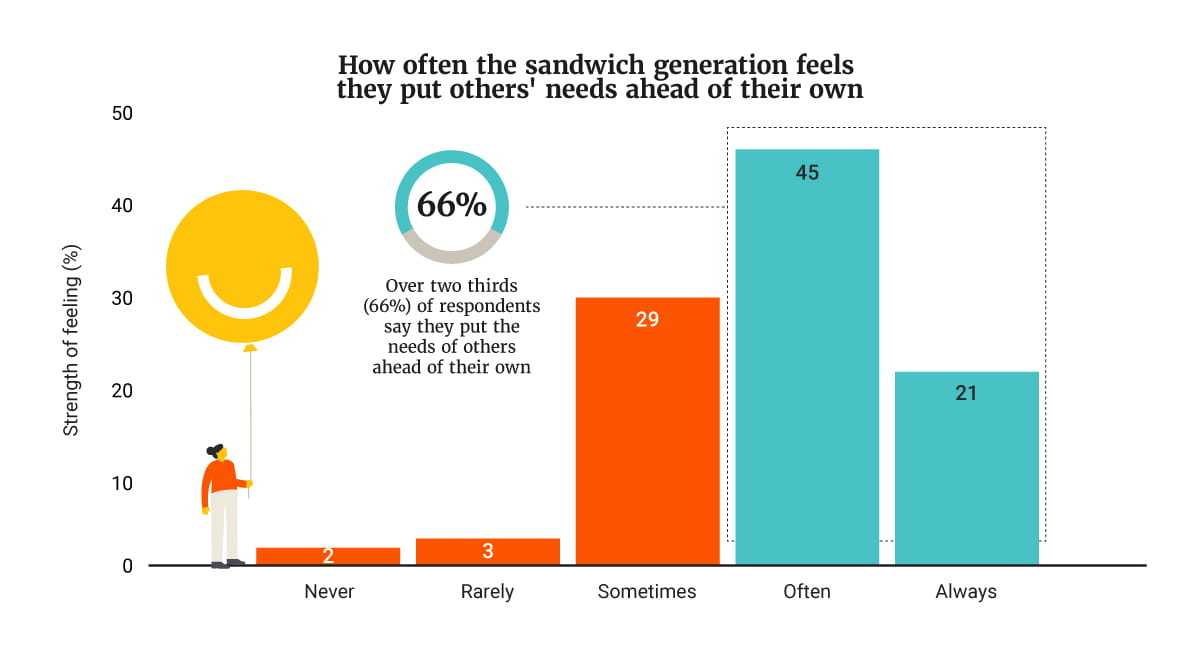
Data sourced from an Australian Unity survey using Kantar Profiles raw data to understand views of the sandwich generation.
Helping your ageing parents get the support they need
The first conversation is often the hardest: suggesting that your parent needs help at home.
But it's also the most important. Get this one right, and future conversations—about aged care or estate planning—become a little easier.
Your younger self might not have realised these conversations would be a part of your relationship with your parents as they age. This shift in family dynamics often feels like a role reversal, and is also known as “parenting up”. Approaching this change can be complicated, complex, emotional and difficult.
Inouk Mackay, Mental Health Coach at Australian Unity has this advice: “Work together, be collaborative and share the load with other family members. Ask questions early on wherever possible to protect your parents’ dignity at all costs.”
While shared decision-making is the goal, it isn’t always possible. Sometimes it’s about delivering news and guiding change with empathy and respect.

Why it’s important for you to be involved
For older Australians, there’s a sense that accepting help means losing independence.
But Elizabeth Albury, GM of Service Delivery at Australian Unity, says this is a narrative that sandwich generation carers can change. For example, you can help your parent see home health and care services as a way to bolster their independence.
“Don't talk about ‘what is home care’, talk about the benefits and what their day-to-day might look like if certain tasks are outsourced to a provider such as Australian Unity,” says Elizabeth.
When it comes to family caregiving communication, it’s all in the framing of the conversation.
Help your parent see what they gain, not what they lose. Grocery shopping alone can take hours each week. What if that time was spent with their grandkids? In the garden? On a new hobby? Or simply resting?
Approaching difficult topics
The Australian Unity Wellbeing Index has repeatedly found that relationships are integral to our wellbeing. So it's not surprising that tough conversations, which could upset your close personal relationships, can feel so nerve-wracking.
Annabel Reid, CEO of Carers Australia, says it’s always a good idea to start difficult conversations before they’re needed.
“People usually need time to socialise an idea. Talking to a parent about moving into residential aged care, for example, might be a shock for them. So start slowly, start gently,” she says.
You might try starting with positives. Talk to your parent about what they envisage for their future so you can understand their desires and how this new decision might fit into that.
Inouk agrees that it’s important to take these conversations slowly, allowing people time to respond and absorb information.
“Take your time, even if that means it happens over the course of a few conversations. If it gets overwhelming, it’s not a good idea to keep going,” she says.
Using assertive communication for tough conversations
“These kinds of conversations can be difficult and emotionally charged. For your parents, they might feel like they're losing independence, while you might be facing the fear of losing your parents,” says Inouk.
This is where assertive communication is key.
“It’s that really nice place between being too aggressive or too passive in your approach. People who use assertive communication usually have their needs met, they get along with others and they have healthier self-esteem,” she says.
It involves saying what the problem is and how you feel about it.
“Be objective. Tell the person how you feel and why, and remember that you have the right to express your feelings,” Inouk continues.
Equally, make sure you choose a moment when everyone is calm and in the right head space. Be respectful, be empathetic, and acknowledge their feelings and opinions.
And if the conversation doesn’t go well?
Annabel urges you not to beat yourself up if things don’t go as planned.
“No matter how beautifully you conducted that conversation, it might not go how you intend it to,” she says. “They might be angry or aggressive or they might refuse the suggestions you've offered, and that can make you feel guilty about what you're asking for.”
It’s at these times that you need to remember you’re doing your best. Managing family dynamics in caregiving is no easy feat.
“You're trying to make choices that are the best for everyone, and that's the cognitive load we talk about for sandwich generation caregivers.”
This is where speaking to others in your situation and reaching out for counselling support can help bring objectivity to your thinking. Don't forget to consider how you can support your own needs in these situations.
The ripple effect
Caring for loved ones can take a toll, but its impact often reaches further than we realise.
Inouk Mackay, Mental Health Coach at Australian Unity, says the ripple effects of caring can be felt in nearly all areas of your life.
“It can strain relationships with your partner, your kids, your friends, your workplace. It could even change your life goals. You might change your career because you don’t have the capacity to put time and effort into it. It might change your hopes for travel or your financial goals. It can even have an effect on your identity, if you feel like you’re the emotional anchor,” she says.
The good news? You have the power to minimise the ripples.
By identifying your priorities, being transparent with others and prioritising time for relationships that matter, you can nurture the bonds that sustain you. Caregiving doesn’t have to mean sacrificing connection. With the right approach, you can strengthen it in new ways.

The ripple effect on your children
Annabel Reid, CEO of Carers Australia, says that the load will often ripple, first and foremost, onto your immediate family.
“If you are caring for children and elderly parents, suddenly time is being split between the two, and maybe an elderly parent might have increasing needs, so children might get less time,” she says.
Your children might make comparisons to how present other kid’s parents are, and this can build on the guilt that many people within the sandwich generation experience.
To limit this ripple effect, try to think of ways you can include both your parents and children in activities, so they become social occasions rather than chores.
The flow on effect for children
Sometimes children are encouraged to assist with elder care too. This can be a great opportunity for bonding and becoming closer as a family. It might involve your teenage children spending a day with their grandparent or your younger ones assisting their grandparent with physio exercises.
However, Annabel says that taking on too many caregiving responsibilities can have an impact on children, with them sometimes becoming young carers.
“Young carers do get overlooked because they often don't need support in the same way the older person does,” she says.
Make sure you acknowledge, support and thank your children for the caring assistance they might provide to their grandparents to limit the impact and any feelings of being overlooked.
The ripple effect on work
“A lot of people are scared to tell their boss they have caring responsibilities because they feel there may be prejudice,” says Annabel. “It’s a difficult balance, it’s nuanced, and it’s different in every workplace and work relationship. But talking early helps everyone be prepared mentally and practically should you need to step away from the workplace.”
Start by expressing your commitment to the workforce, demonstrating your accountability and emphasising what you’re delivering. Then ask if an adjustment could be made to support your caring responsibilities.
Even something as simple as having work from home days can mean an additional hour or two back in your day, which can be invaluable for time-poor carers. Hopefully you can reinvest that either into your caring roles or caring for yourself.
Getting clear on your priorities
To lessen the toll caring takes on other aspects of your life, Inouk says it’s vital to be clear on your priorities.
“Decide what you’re prepared or not prepared to sacrifice and be open about that with yourself and others. Be willing to negotiate at times but stand strong if there are things that you’re just not prepared to do or sacrifice.”
— Inouk Mackay,
Mental Health Coach,
Australian Unity
For example, your child might be starting Year 12 and you know this will be a difficult year for them. In this case, you might want to access additional support or outsource more tasks so you have time to prioritise ways that you can support your child.
“Writing down your goals, making a plan and being really organised can help you see the bigger picture in terms of what’s most important to you right now,” says Inouk.
Being open and transparent with others
Open conversations with your family and friends about your parents' needs can help them understand what’s going on and why you might be more absent.
“Reassure your children that you are there for them if they really need you, that they are loved and nothing is different—it’s just the situation at the moment,” says Inouk. “Hopefully your loved ones will see you as someone who is looking after family and making sacrifices for someone in need.”
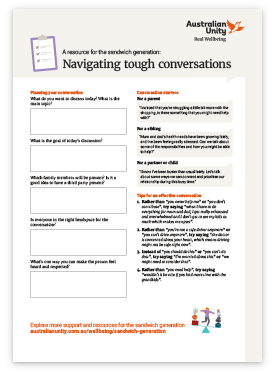
Navigating tough conversations
The best time to talk about the future is before it becomes urgent. This resource gives you practical conversation starters, prompts and tips for keeping things constructive—even when the topic is tough.