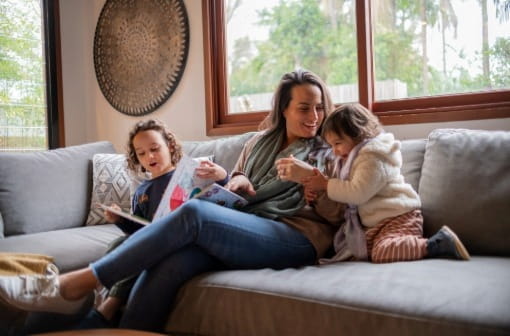
“A sense of belonging and social connection is absolutely core. Strong community connections help buffer us in dark times—and you can see the power of it when communities rally together, as they have during recent natural disasters like fires and floods in Australia. It’s been pretty phenomenal.”—Dr Kate Lycett, lead researcher, Australian Unity Wellbeing Index
Key points
- Humans are social beings. Even if we’re happiest in our own company, we need people around us and a sense of connection to thrive; without it, we can feel lonely and isolated.
- The Australian Unity Wellbeing Index reports that feeling connected to community has a positive impact on our wellbeing.
- Without a sense of community connectedness—whatever that may look like—we begin to feel isolated and lonely.
Whether it’s with a group of friends, a hobby group, a sporting team, our neighbours or an online community, humans require a sense of belonging.
Think about the last time you went for a period of time without seeing other people. It might have been a few hours, a few days or a few weeks. How did you feel?
Humans are social creatures. Even if we’re happiest in our own company, we need people around us at certain times and a sense of connection to thrive; without it, we can feel lonely and isolated.
But does feeling part of a community actually affect our Real Wellbeing? Why is community important to personal wellbeing and how do we foster these community connections?
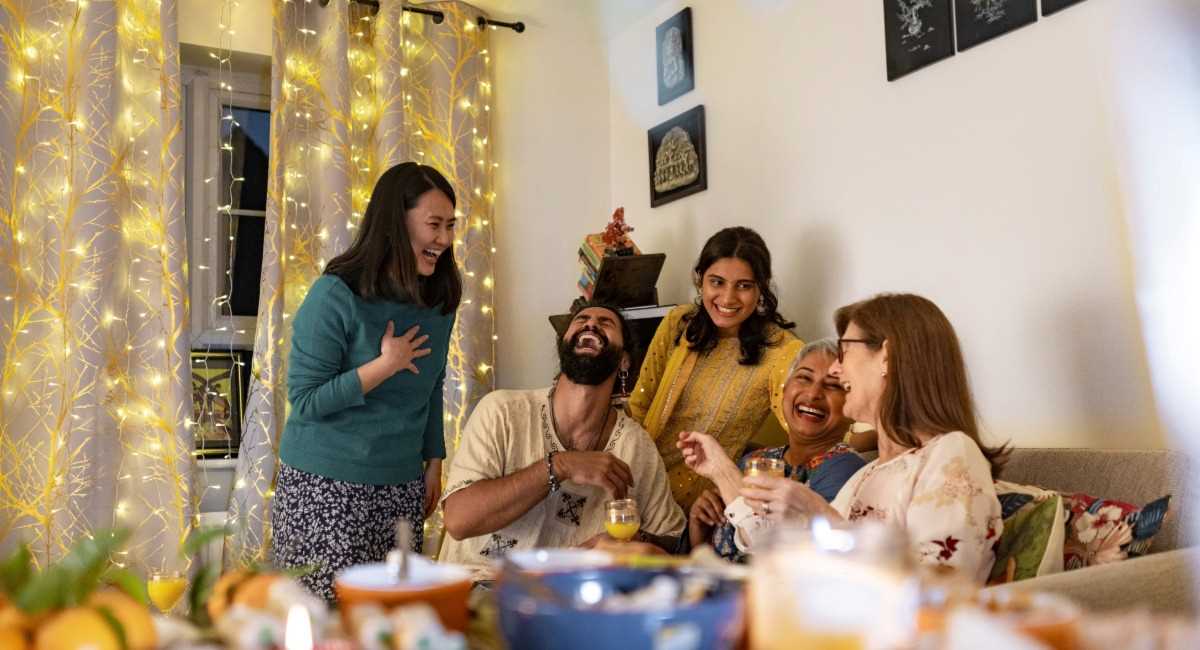
The benefits of community
Community connectedness is the measure of our sense of community—that is, how connected we feel to those around us.
The leading study into the wellbeing of Australians for more than 25 years, the Australian Unity Wellbeing Index, developed in partnership with Deakin University, reports that feeling valued, connected and accepted within a community has a positive impact on our wellbeing. Our communities impact our emotional wellbeing by offering us collective support and a sense of belonging, and they play a key role in preventing loneliness.
“A sense of belonging and social connection is absolutely core to our wellbeing,” says Dr Kate Lycett, lead researcher of the Wellbeing Index. “Strong community connections help buffer us in dark times—and you can see the power of it when communities rally together, as they have during recent natural disasters like fires and floods in Australia. It’s been pretty phenomenal.”
The Wellbeing Index has identified “community connectedness” as one of the seven key life areas, or “domains”, that contribute to our wellbeing, along with relationships, standard of living, health, personal safety, achieving in life and future security.
What makes a community?
The Wellbeing Index’s research makes it clear that personal relationships—both romantic and platonic—play a critical role in our wellbeing. A sense of community can have a similar effect, allowing us to explore hobbies, shared interests and ideas with other people.
Fundamentally, communities provide us with:
- an emotional connection with people who share our history, our sense of place or experience
- a feeling of belonging
- a sense of support
- a way to have our voice heard and valued by a wider group of people
Interestingly, 2025 data also showed that rural areas had the highest level of community connection. “Rural areas have smaller communities, so people tend to be more reliant on each other, and that has many positives for everyone in the community,” says Kate.
While we trust our closest friends, family and loved ones with our secrets, hopes and dreams, broader communities of people who share our hobbies and interests allow us to make meaningful connections that include the experiences that increase community cohesion.
The impact of a lack of community on our social wellbeing
It’s no secret that the less social interaction we experience, the unhappier we become. Without a sense of community connectedness—whatever that may look like for us—we can begin to feel isolated and lonely.
The impact of social isolation can be damaging. Not only can it increase mental health concerns such as depression and anxiety, but it can also contribute to physical health issues such as heart disease and stroke.
“Social isolation is a really important warning sign of psychological distress—particularly when it’s a change in behaviour. It’s when someone isn't interacting the way they used to, whether that’s with friends, colleagues, or family,” says Kate. “It’s different to loneliness. Loneliness is about how people are feeling, whereas isolation is actually physically removing yourself from others.”
If you believe someone you know is isolated or lonely, it’s important to help them find a community where they can build meaningful connections.
How community builds wellbeing: Marcia’s story
Communities can be found anywhere, so long as there is a shared experience, shared interests or mutual history.
After a trio of serious diagnoses, Marcia found herself looking after her daughter, husband and mother through their health battles. She spent the better part of two years in and out of hospitals with them, visiting doctors and losing count of how many waiting rooms she saw, but was surprised at how she felt when her family members received the all-clear.
“I think when you go through a period and you’re caring for people all the time and, all of a sudden, they're all okay. I felt, I guess the word that comes to mind is lost,” she explains. “I realised I didn’t have to be everyone’s carer all the time. I just sat back and I thought, ‘Oh, I need to do something for myself’.”
For Marcia, that “something” was finding a new community that allowed her to express another side of her personality. “I found a hobby that I fell in love with, where I was able to connect with other people of different walks of life. I've developed really close community connections and some good friendships. It’s given me a whole new lease on life!”
Being part of a community makes life richer and enables us to thrive. We meet new people and gain valuable support and purpose, helping us to improve our wellbeing throughout our lives. Whether it’s with a group of friends, a hobby group, a sporting team, our neighbours or an online community, a sense of belonging is what humans require.